Roadtrek

Roadtrek
Showing posts with label George Washington. Show all posts

Wednesday, October 14, 2015

Colonial Williamsburg Revisited

I have been going to Colonial Williamsburg for over 50 years and have seen many changes over those years. Meryl and I started going to CW - as called by those who work there and those who have a special relationship to Colonial Williamsburg - when we were first married and have gotten there almost every year since. We had not been able to get there last year and I have not written about it here since the first year that we had the Roadtrek. Things have changed since then and it is time for another article.

From where we live - by routings - the trip should take eight hours including stops for lunch and dinner. With construction and traffic the trip can take almost 12 hours and while we have done this straight through it is not the best idea to do. A stop in PA and move on the next day for the rest of the trip. I take what many would consider the wrong way to go. We go on 95, around Baltimore to avoid propane restricted tunnels - which some claim you can go through and some claim you cannot - so we just go around and take the bridge - if we are not stopping in PA first. Then it is 95 to the Capital Beltway and around DC back to 95 and straight down until the Richmond bypass and then onto Rt. 60 which takes you right to CW and the campground that we prefer. We have rarely gotten stuck around Baltimore and we have never had a problem around DC. The problem comes in before Fredericksburg and approaching the bypass around Richmond. Many have shared what they feel are better routes - all of which take one way around and way out of the way - and when looking at travel times for these routes come out to be the same time as dealing with the traffic - but you are moving along through the many more miles. Anyway - the unpopular 95 has worked for us before and since the Roadtrek. It also brings us to a gas station that has always had the lowest price gas of any in that area or any other that we go through - both traveling and at home. I don't know why this is with this station but it has been this way for years. We paid $1.94 here in August when gas at home was still near $2.60 and was not much better anywhere else that we traveled through. Hmm... wondering what it is right now - quick check with Gas Buddy and its $1.88 (Oh my!). (This is at the time of this writing 9/30/15.) Here it is still well over $2.00. (I get real excited when I see low gas prices!) So moving on - cheap gas that actually lasts and is not gone after 100 miles - to getting to the campground.

We stay at American Heritage campground in Williamsburg, VA. It is reasonable and is the nicest campground of any that we have ever been to. Every site is a paved, level site. The cable television selection is better than most and the wifi is very good. We don't use it but there is a swimming pool and also sports fields and a hiking trail into the woods. It is situated off the road and you do not hear the road noise.

So, on to Colonial Williamsburg. If you have never been there or don't know at all what it is, CW was built in the 1930s with Rockefeller money. Rockefeller was enticed to spend his wealth by the pastor of the local and historic Anglican church who had a vision of restoring a sleepy college city back to what it looked like in the 18th Century. Many of the buildings remained. Well, Rockefeller with the help of Rev. Goodwin's influence bought the whole town - well just about the whole town as there were a few holdouts and they were just built around. They created Williamsburg as it was with archaeologists and researchers and specialist architects and did so with 18 Century building techniques. What you see today is coming on 100 years old on its own in a not a very long time. What you see, go into and are surrounded by are restored or reconstructed homes, public buildings, and trades shops populated with people of the past - living history interpreters that bring the city of the 18th Century back to life. It is all around you and if you let yourself be drawn in, you are part of it. It is time travel - and for the serious visitor - meaning not the family or couple who come in for the afternoon on their way to the amusement park, walk the streets and don't buy a ticket to experience what goes on inside and areas outside not on the street and look and leave - it can be an experience like none other.

In CW you will encounter every day people of the past, trades and workmen - men and women, and some people who you may recall from history lessons long ago - Patrick Henry, Thomas Jefferson, George Washington - to name a few. These are not people in costumes walking around as in Disney parks - these are historians who have taken their interpretations to the highest levels of research and will convincingly portray these people of the past so that you will come away believing that you have met the real thing.

Since my last article some things have changed. I spoke then of the Revolutionary City program which at that time was spread over three days. Since that program has gone from three days to two days to now a part of one day. These are scenes of events that took place in the city of Williamsburg in various years during and before the American Revolution. The focus this year has been 1781 - the year leading up to Washington's victory over the British at Yorktown, Virgina just several miles from Williamsburg. The year will change next year, and the next year, etc. Added in the day in the afternoon were outdoor,  staged programs about other events that took place in the city - most on a more personal basis between people who lived in the city in the 18th Century.

There has been some construction going on as research showed that a "Market House" existed on a stretch of property that has been left open. The CW team of archaeologists did a dig and found traces of the posts that supported this open air structure along with a small building that was also found in the research. It has taken three years to complete the research, build the buildings using historic tools and methods and it is about to open to the public this Fall.


This is where people would go to do their food shopping - no, not everyone grew their own. There was a market place that would open early in the morning and some would have stands inside the Market House structure and others would sell from blankets around the outside. You would go to buy vegetables, fruits, fish, and meats. One needed to get there early to get the best cuts and the best choices. When opened it will be interpreted both as an historic site and also be used as a sales site.

This is the newest - some of the photos below are the oldest. The Capitol Building - the building that housed the legislative body of the House of Burgesses where Washington, Jefferson, Henry all served as Burgesses. The Capitol is a reconstructed building built on the original foundation.


Duke of Gloucester Street - the main street of the colonial city - full of trades shops, taverns, and residences.


A tavern in the 18th Century is not only a place to go to enjoy a rum or punch but also is a place to dine and/or sleep.


You will also find the homes of some patriots who were very famous in their time but little taught in history books today - unless you live in Virginia. This is the home of Peyton Randolph - the President of the First Continental Congress and the President of the Second Continental Congress until his death while in Philadelphia at the beginning of the proceedings. He was highly respected  throughout the Colonies and would have been, it is felt, the first President of the United States had he lived.


In the trades shops and yards you get to see and interact with those everyday people who helped make things happen. This is the yard of the Wheelwright's shop.


One of the staged programs - this looks at a serious situation of a woman about to be married who realizes as we watch the short encounter with the aunt of her fiance that she will not be able to bring both her personal servant (slave) and that servant's child with her to her marriage. There are many programs presented that make very real to us the realities of life in this time.


For us this is always a great trip. We had the pleasure to be able to talk with old friends who work at CW who we have met over the years and we also met, by surprise, friends from home that were there visiting as we were who are fellow members in our reenacting unit.

If you have an interest in history this is a must visit. When you arrive buy a multi-day ticket. It is now good for any number of days from the date of purchase to the end of the calendar year. It takes a minimum of three days to see enough of Colonial Williamsburg to come away with an appreciation for it. Less and you barely scrape the surface. There are also many other historic places to visit in this area and I will write articles about our visits to those soon as well. We spent 9 nights and ten days here this year. We have stayed longer. It is open all year. From January through February there are fewer programs but all buildings remain open. There is RV parking at the Visitors Center and shuttle buses or a walking trail to the historic area . I have a secret parking place to park the Roadtrek that I am thinking now I better keep to myself...

Colonial Williamsburg


Wednesday, October 2, 2013

Valley Forge National Park, Valley Forge, Pennsylvania

We took the Roadtrek to Pennsylvania to the dealer for service and after the service visit we went to Valley Forge National Historic Park just north of Philadelphia and right off the Pennsylvania Turnpike at the Valley Forge exit. We have been to Valley Forge many times before but this was our first time there with the Roadtrek.

When you arrive at the park you drive past the Visitors Center building and enter the parking lot. There is an RV parking area and while the Roadtrek is small compared to most RVs that would park in these spaces, we parked there as the car spaces were tight.


We were there in the middle of the week in early August and the park was not crowded. This parking lot is just for the Visitors Center. When you tour Valley Forge you do it along the park road from stop to stop. There is a map that is free at the desk inside the Visitors Center. There is no park fee to visit Valley Forge. In the Visitors Center you will find a small museum, a film, information about Ranger tours, and a gift shop.

Valley Forge was the first winter encampment of the Continental Army during the American Revolution.  Fighting was difficult in winter in the 18th Century for both sides and armies would go into winter camps for the winter. This was not a time of truce and each side was always on guard. Valley Forge has a reputation in history as being a bitter cold, freezing winter but this is more myth than fact. It actually was a mild winter and while there certainly were hardships and a great deal of boredom, it was not as history books like to portray. The hardest winter for the Continental Army was spent at Morristown, New Jersey where two winter encampments were held in years after Valley Forge. At Morristown, all of the horror that is attributed to Valley Force actually did take place. You can visit the historic sites in Morristown of those encampments.

The musuem at Valley Forge should be better than it is. There are few exhibits. There had been plans to locate a full musuem of the American Revolution here where this museum and Visitors Center stands  but Federal funding was never allocated to do so. That museum will be built with private and government funding in Philadelphia and planning is underway now. Much of what had once been in the museum at Valley Forge has gone to be placed in that museum. What is left are just brief glimpses of what remains of camp life at the Valley Forge encampment.

Cooking utensils found from the encampment

Musket cartridges found from the encampment. The musket ball is tied at the top of the paper cartridge filled with blackpowder
See the museum and then go up the staircase and outside to a separate building that houses a film about the encampment at Valley Forge. Seeing the film will give you a better appreciation for what you will see when you tour the park. After the film, go back into the Visitors Center and stop in the gift shop which has a very good selection of books. Then head back to the parking lot with your visitors map to your Roadtrek as you are about to see where and how the American soldiers lived during this winter encampment.

You drive out of the parking lot the way that you came in and at the Visitors Center building make a right turn onto the park road. These roads are not only used by visitors to the park but also by local traffic. Most are one way. There will be parking lots or side of the road parking spaces as you get to each of the sites shown on the map. The first stop you come to has the most detailed presentation of a typical unit camp.


Soldiers slept in huts which they built themselves. Each unit had common areas that included cabins for the soldiers, a common fire pit for cooking, and a bake oven. At this stop you can walk inside a cabin and look inside of others.


Six men sleep in this cabin. There are another three pallets on the opposite wall. One man to a pallet. One man to a pallet. This is actually pretty good for the Army at this time, as six men also slept in one small private's tent. Each cabin has its own fireplace. While smaller, this cabin is not much different from a poor man's home in Colonial America.  One room and a dirt floor were common.

Cooking is done in a common fire pit. Each man is given his own rations. Many pool those to create a larger meal.
A common bake oven is used to bake bread. Each man is given a supply of flour per day.

You leave this stop and drive through the rest of the park following the map. There is a lot to see and if you stop at each site you will spend most of a day. There are a few memorials to see including an arch. There is a church/shrine with a very good museum (private) within the church. This museum is better than the one in the Visitors Center. You can also visit the house that George Washington stayed in with his officers and his wife, Martha, during the encampment. Martha Washington came to be with her husband several times during the war and each time became a part of the camp and helped care for the soldiers and the wounded.

The map will lead you to the house that Washington stayed in. It is important that you follow the map as at this point the park road goes out onto a main route with a lot of traffic - especailly at rush hour. Make sure that you make a right turn and not a left (as we did). The right turn will take you to the parking lot for the house which is a little distance away from the house location. We turned right because in the long past there was a smaller parking lot and a direct road to the house just to the right of the intersection. Remembering that old way to go, and not that they completely closed that road to all traffic we went the wrong way and this took us in rush hour traffic onto a busy two lane route that climbed hills with no place to turn a vehicle as large as the Roadtrek around. At this point there we were reaching closing time for the park exhibition areas and we decided not to try to get back. Eventually we relied on the GPS to route us back to a main road that would take us back toward the turnpike without having to make a U-turn. We have been to Washington's house before. It is worth seeing. At some point in the future when we have more time, we will go back to Valley Forge. It is really worth a trip if you have any interest in history.

Most who come to this area in a motorhome and want to stay in a campground stay in the KOA West Chester/Philadelphia. This campground is southwest of Philadelphia and a distance from Valley Forge. There is a campground north of this area in Quakertown. There is also a campground in Kutztown, Pa - Pine Hill Campground. All of the campgrounds will involve a drive to get Valley Forge. While George Washington and his army could camp there - you cannot. I have not stayed in any of these campgrounds other than Pine Hill and I cannot recommend any but Pine Hill which is perhaps the most distance away - the length of the PA Turnpike Notheast Extension from I78 south to the main turnpike.There is a review of Pine Hill on this site.

The Valley Forge National Historic Park has a website. This will take you to it.  Since our visit, the Visitors Center front is under renovation.


Wednesday, November 21, 2012

Mount Vernon - Home of George Washington, Alexandria, Virginia


We left Williamsburg and headed back north.  We were stopping for the day at Mount Vernon, the home and "farm" of George Washington, located in Alexandria, Virginia. We would not be spending the night in a campground near here and, as a matter of fact, campgrounds in this area are few and far between.

As we headed north on I95, we decided that we would stop for lunch at a fast food restaurant. I had decided to wait until we got almost to the exit that we needed to take to make our way to Mount Vernon before we stopped for lunch. I should have stopped earlier, because as we came up to the last few exits before we needed to head east to Mount Vernon a sudden, severe storm came up. In a heavy rain storm in the Roadtrek you slow down, but keep up with vehicles in front of you to be able to follow their lights when visibility becomes reduced. This is exactly what happened and it was difficult to see what was ahead. As it got worse, we came upon the exit for Mount Vernon and we very cautiously and slowly got off the road. As with every other day of this trip the forecast was - you know it, if you have been reading along in this series of articles - scattered showers and isolated thunderstorms. This was far from a shower. It was a heavy downpour with strong winds. The road that I exited on was a mix of country road and commercial two lane highway. When we saw a safe place to turn off, I did and we just sat in the Roadtrek watching the rain come down pounding on the roof, hoping that it would let us and we could continue along. These storms seem to come and then go in Virginia and almost as sudden as it started it let up. We pulled back onto the road and headed straight for Mount Vernon. There would be no stopping for lunch. I just wanted to get there hoping that the rain would completely stop. And when we arrived, it did.


There is a lot of parking for Mount Vernon. We followed the signs along to what is designated as RV parking and this was in the last parking lot - and then there were only a few spaces that were sized for RVs. Other parking spaces, in this lot and the others is just slightly short for the Roadtrek, so we parked in one of the large RV spots. It happens that car drivers seem to feel that they need to park in these few RV spaces also. When we arrived there was one other RV and a number of cars in RV spaces. The photo on the right is when we were coming back to the Roadtrek at the end of the day and as you can see, this little car had to park in the "big boy's" space.

This was not our first visit to Mount Vernon. We have been there many times, but never before with the Roadtrek. Several years ago, there were some additions built at Mount Vernon and now in addition to Washington's house, the outbuildings, his tomb, and his farm, there is a wonderful education center and also a museum. You can spend a lot of time here and we spent a full afternoon which was not enough time to see everything. We did not go down to the farm which sits along the water of the Potomac River and we did not spend time with someone who works at Mount Vernon who portrays an exceptional Martha Washington who happens to be a friend. We did stop for a few minutes to see her while she was doing her portrayal. Plan to spend a full day. In fact, if this is a first time visit, I recommend two days. You can purchase a ticket good for a full year for just a little more than a single day ticket and you will be able to come back whenever you want. The year the new education center/museum complex opened we spent two full days at Mount Vernon and still did not go to the two locations off the main property - Washington's mill and Washington's distillery.

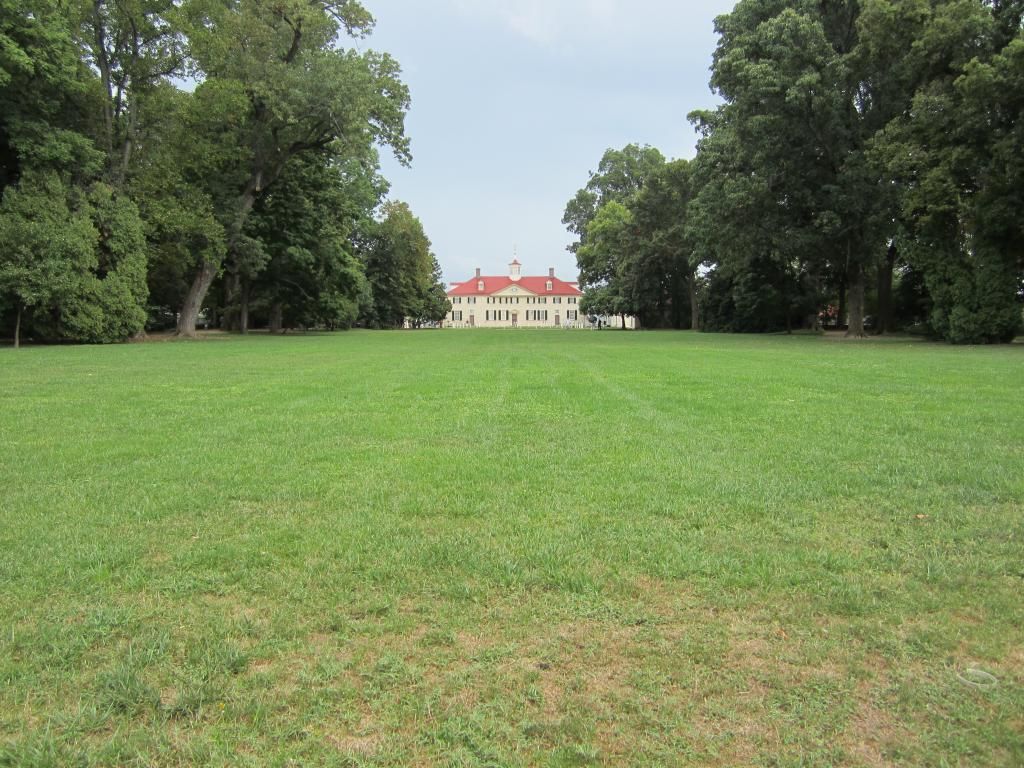
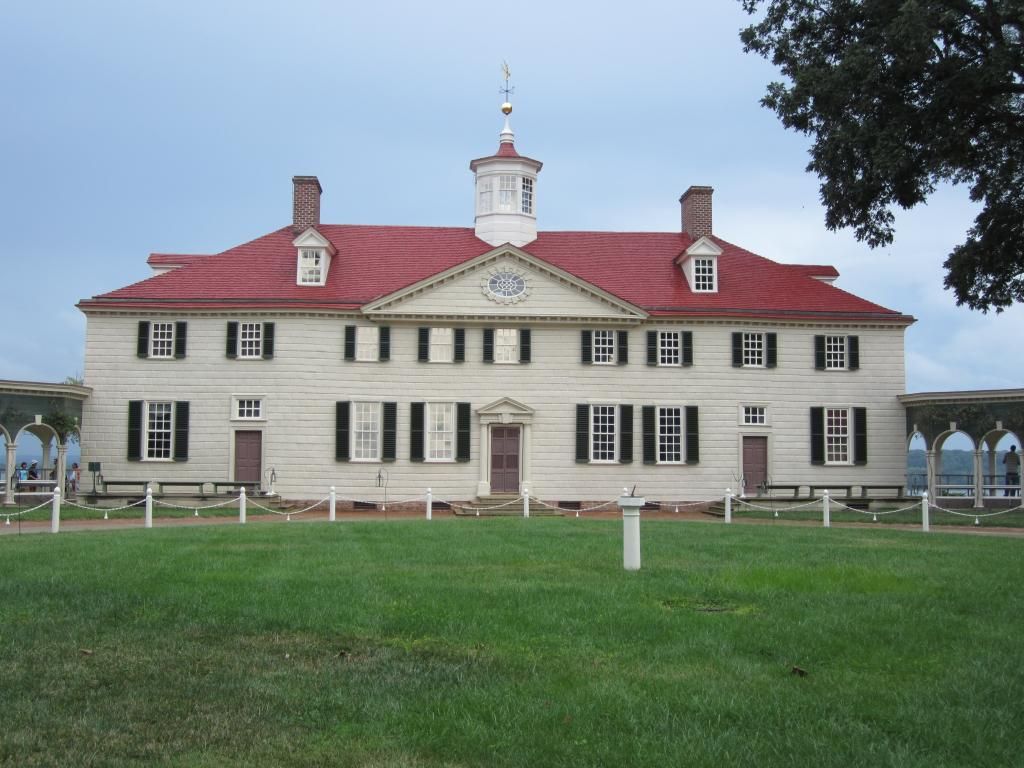
Let me tell you about what you will see when you go to Mount Vernon. There is no photography allowed inside the house or the museum. Photography is permitted anywhere outside and also in the education center. When you purchase your ticket you will be give a time to get on line to see the mansion. First stop in the Introductory Center to watch the film about George Washington. Then walk out to the house and the property. Arrive at the line before the  time on your ticket. How long a line you will encounter will depend on the time of year and the day of the week. We had very little wait on this Sunday at the end of August. By this time the rain had stopped, though everyone was clutching umbrellas. The line takes you into an outbuilding to the left of the mansion where you will be shown a short video of how the house progressed in its construction from a single story small house to what it is as you see it today. There is a tour guide there who will answer any questions about the house's construction. As the line in front of you progresses into the house, and the presentation in the outbuilding concludes you move along to the door that you see above on the left side of the house. This is where you will enter the house and the first room that you will come into is the formal dining room. The house is restored and decorated exactly as it was when George Washington lived in it. The formal dining room that you enter is also the room that Washington was laid out in when he died.

Washington lived in this house with his wife, Martha, and Martha's two children from her first marriage - Patsy and Jackie. Patsy died of an epileptic attack in Washington's arms here at Mount Vernon. Jackie died of disease at the Battle of Yorktown, but he was married and had children of his own. Two of these children came to live with George and Martha while two others went to live with their mother and other grandparents in Philadelphia. Washington raised Martha's children and grandchildren as his own.

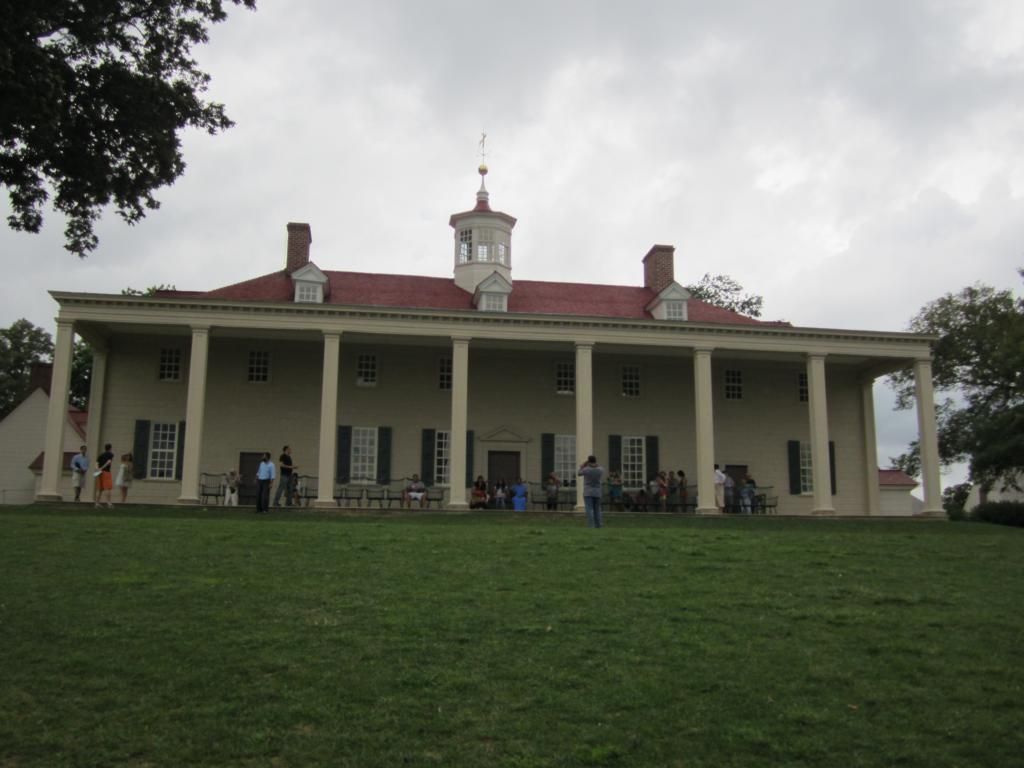
As you exit the dining room you are actually going through a back door outside to the veranda where you will have a short wait to re-enter the house through the river side of the house's main door, shown here in the center of the photo. You are now entering the main hall entrance to the house.Here you will see most of the rooms on the first floor, looking from the hall into the rooms through their open doors. You cannot enter any of these rooms. There are only three rooms in the house that you actually walk through. Ahead to the left is the stairway to the second floor. There will be a tour guide in the hall explaining what you are looking at and answering questions. Before you go "above stairs" be sure to see the large brass key that hangs on the left wall in the hall between the two rooms. This is the key to the Bastille in Paris sent to Washington by Lafayette, following the French Revolution.

When you are ready to move on, you go up the stairs and you will see all of the bedrooms on the second floor. Some were used by guests. Some were used by family. There is a tour guide on the stair landing to talk about what you are seeing. When you walk through the open bedroom ahead on the left you are approaching the most private part of the house - George and Martha's bedchamber. Another tour guide meets on in this narrow hallway. The bedroom door is on the right at the far end of the hall. The furniture that you see is all original and the room is as it was the day that George Washington died. The bed that you see is the bed that Washington died in. He died from a swollen throat that cut off his breathing. There were three doctors in attendance that night. The youngest suggested a new procedure that he had read about - one that today we would call a tracheotomy. The other two physicians thought that idea was barbaric and refused to allow it to be done. The two continued to bleed Washington - and accepted procedure of the time. That young doctor's suggested procedure would have saved Washington's life. When Washington died the clock on the mantel was stopped by Washington's "personal" physician and friend. The clock remains as it was on that night. Martha closed the room and never slept in it again. There are special tours at extra cost that will take you up to the room that Martha moved into after Washington's death. This small, pleasant room is below the cupola in the attic. The room had been open with regular house tours during Christmas. Now that they are offering this special tour with an additional ticket, I am not certain that they are including that room during the Christmas season any longer.

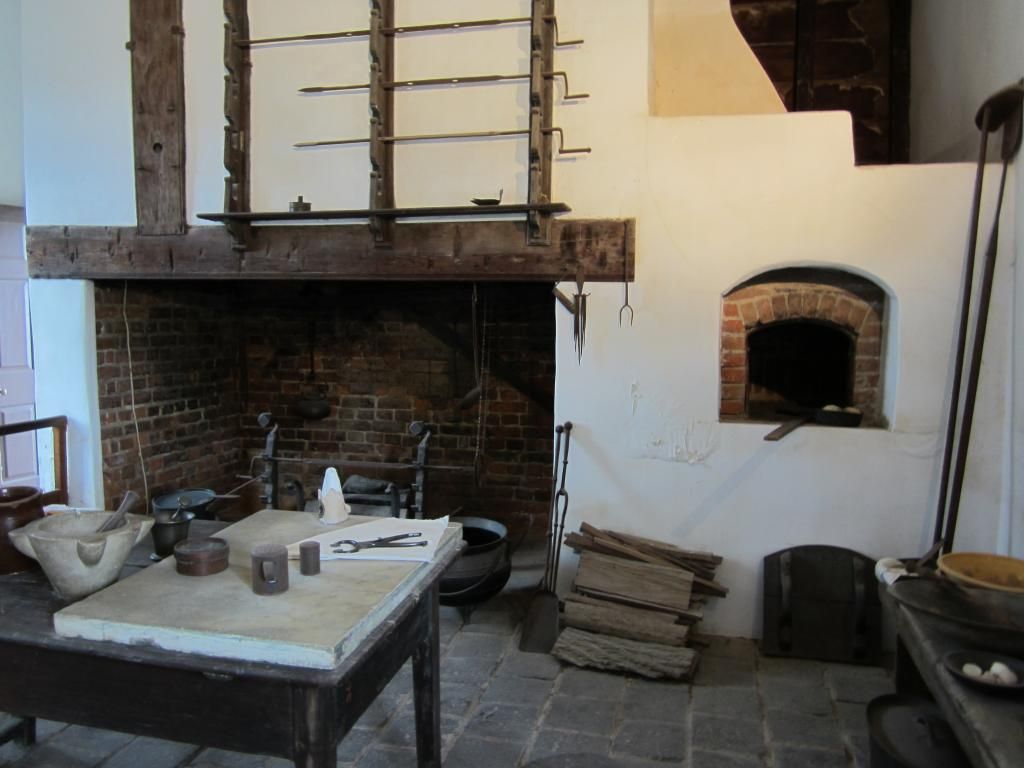
After you have seen Washington's bedchamber, you go back down on a narrow stairway to the first floor. You will walk through a narrow hall to Washington's office. Of course, another tour guide is there to tell you about the room and all of Washington's personal belongings that are in it. This leads you to the end of the house tour and you exit out to a portico that will take you to the kitchen building.

You may now tour the grounds. Look into any of the outbuildings. There are guided walking tours of the property that are included in your ticket with themes like Plantation Life and The Gardens. Once outside the paths become slightly steep. You go down hill to the Farm and half way down you can stop to see Washington's tombs - the original and the one where he and Martha rest now which is a more ceremonial tomb that Washington was moved to several years after he was placed in the "old" family tomb. Every day there are ceremonies held at the tomb and two veterans in the crowd are selected to come up, enter the tomb, and lay a wreath at Washington's feet.

Do not miss the Farm. You can take a shuttle bus down to the river or walk on either of two trails. It is all downhill, so you may want to take the shuttle bus back up when you are ready. At the Farm you will see Washington's round threshing barn and its unique use is demonstrated with running horses several times a day. When you come back up to the level of the mansion, be sure to see all of the outbuildings. There are stables, paid workers housing, indentured servants and slaves housing, 18th Century maintenance buildings, and a manure pit. There is also a building in which you can meet Mrs. Washington (the friend I mentioned above) and she is a delight. She is the perfect Martha and she loves it when children come in to speak with her. She will talk about herself, Mr. Washington, her children, her grandchildren and will answer questions - but keep in mind that she knows nothing about anything that occurred after the 18th Century. She is Mrs. Washington and remains so.

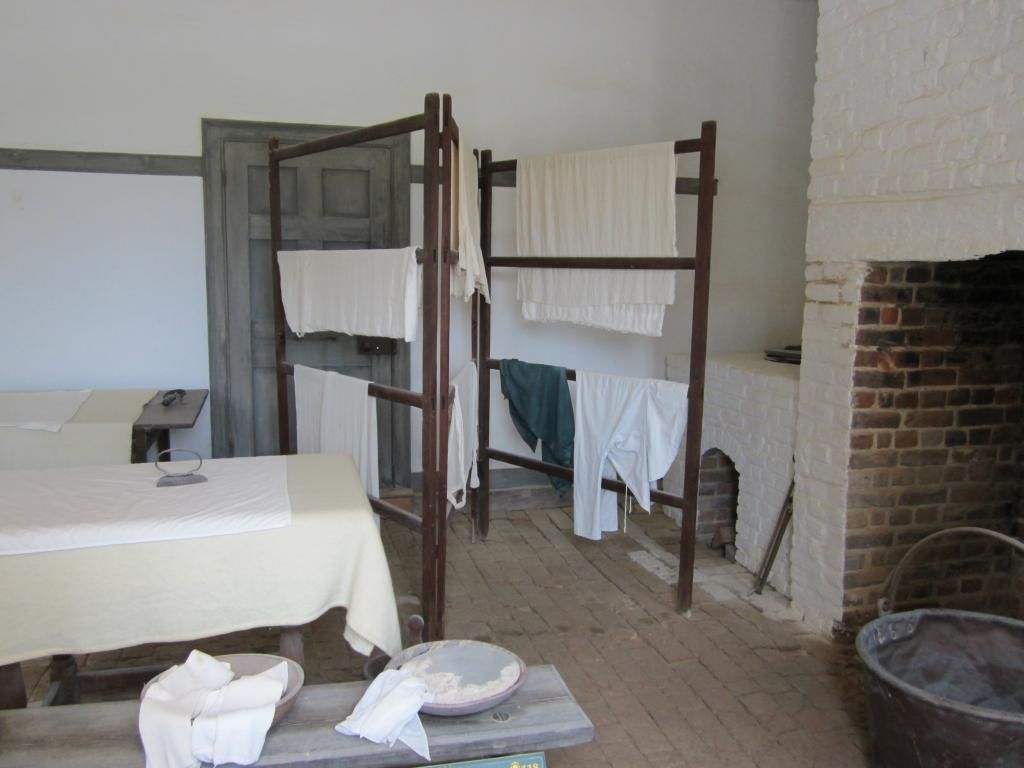
Laundry

Overseer's Quarters


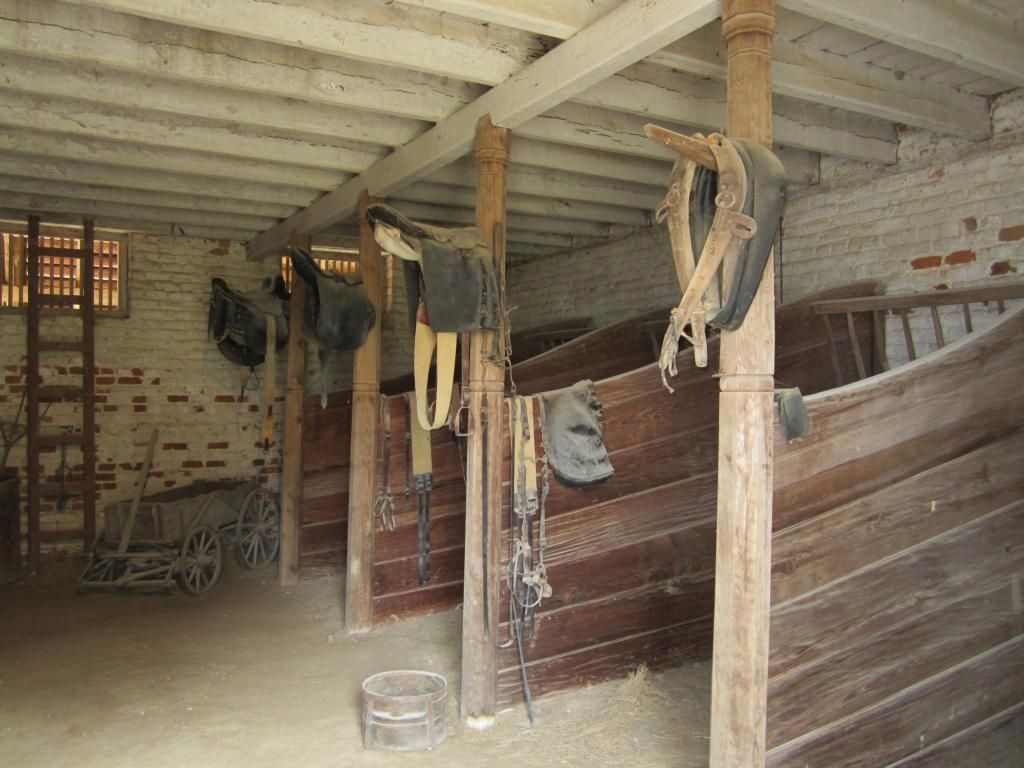
Stables                     


There is a special walking tour being offered now at Mount Vernon. It is not cheap, but if you are a fan of the movie, "National Treasure II", you will be taken to all of the sites that were filmed in the movie including the "secret chamber". Call ahead to find out when this tour is given if you are interested. 

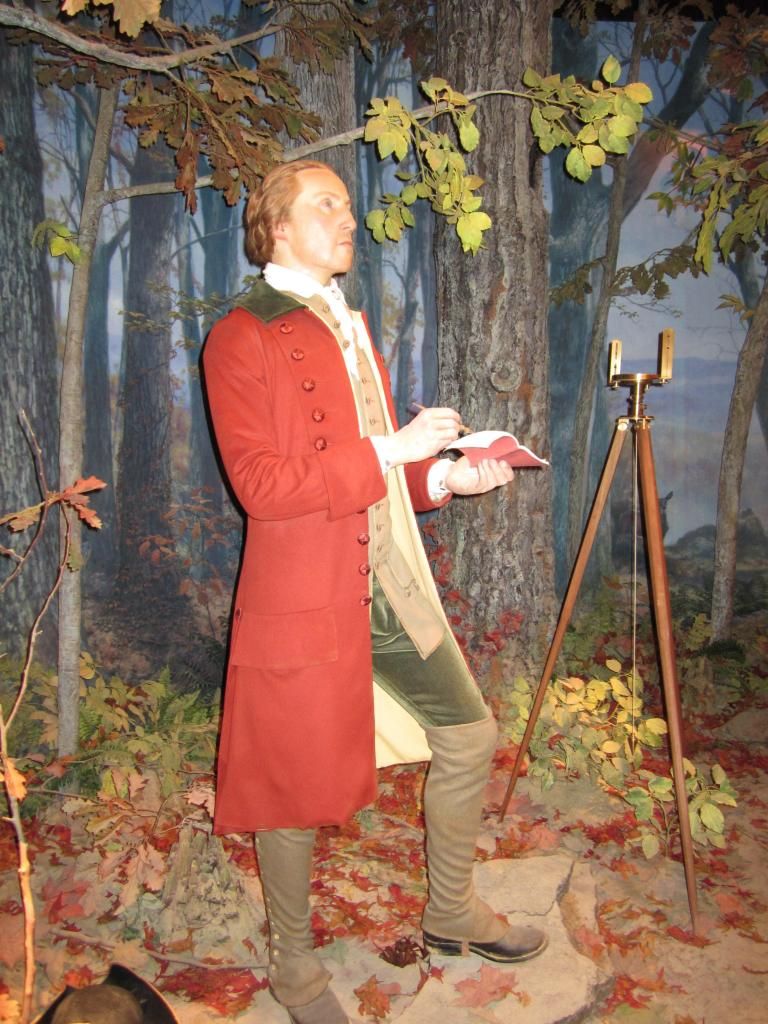
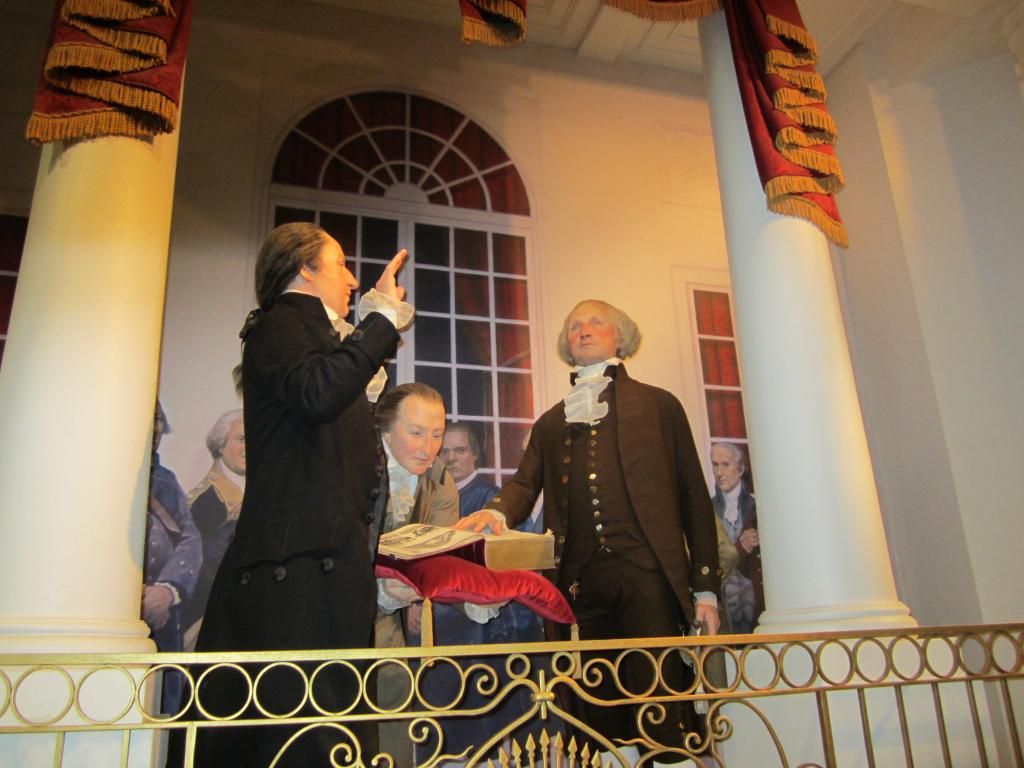
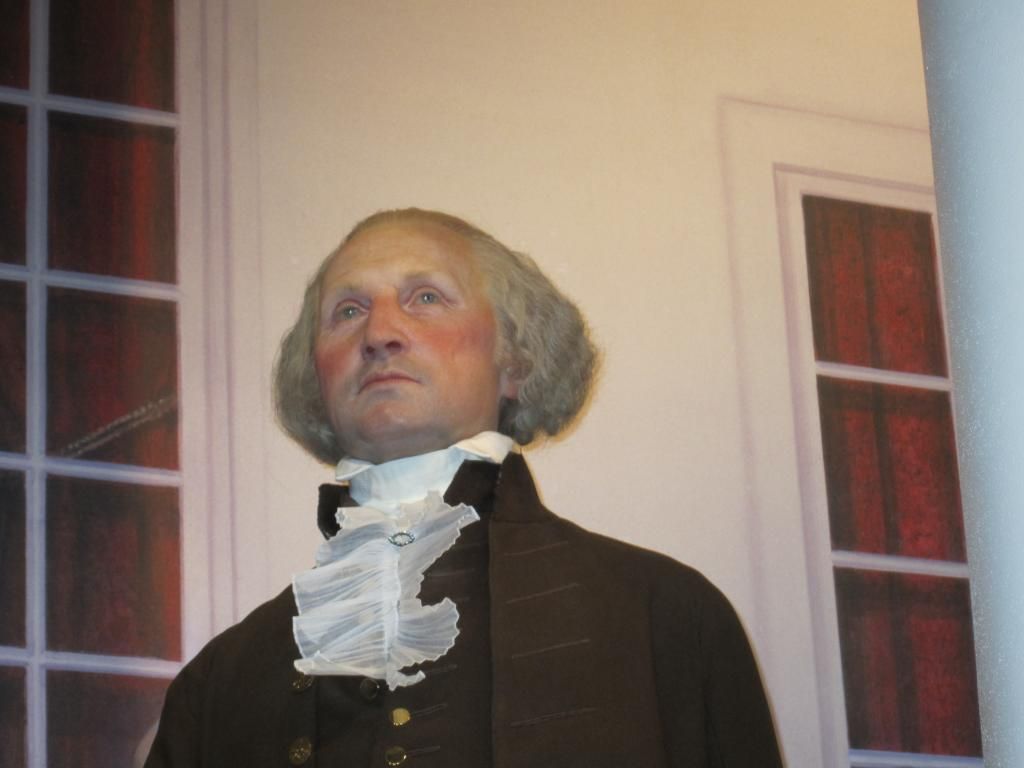
When you finish seeing the property, head back to the Visitor's Center. There is a lot more to see. Start with the Education Center. Here you will learn about Washington's life thorough state of the art interpretation exhibits. You first learn about Washington's boyhood with a brief film shown across the top of a wall in which the young boy grows to a young man as he moves along the wall. You next come into what looks like a scientific laboratory where you will see how a remarkable recreation was made. There are portraits of Washington as an older man. There is a bust of Washington as an older man done by Houdon that is said to be an exact likeness down to size. Scientists have taken that bust and the life and death masks that were made of Washington and created three dimensional figures of what Washington most likely looked like as a young man, when he was General Washington in the Revolutionary War, and when he was inaugurated as the first President. There are no known contemporary images of Washington as a young man. As you walk out of the laboratory you walk into a forest and encounter Washington - young man and surveyor.


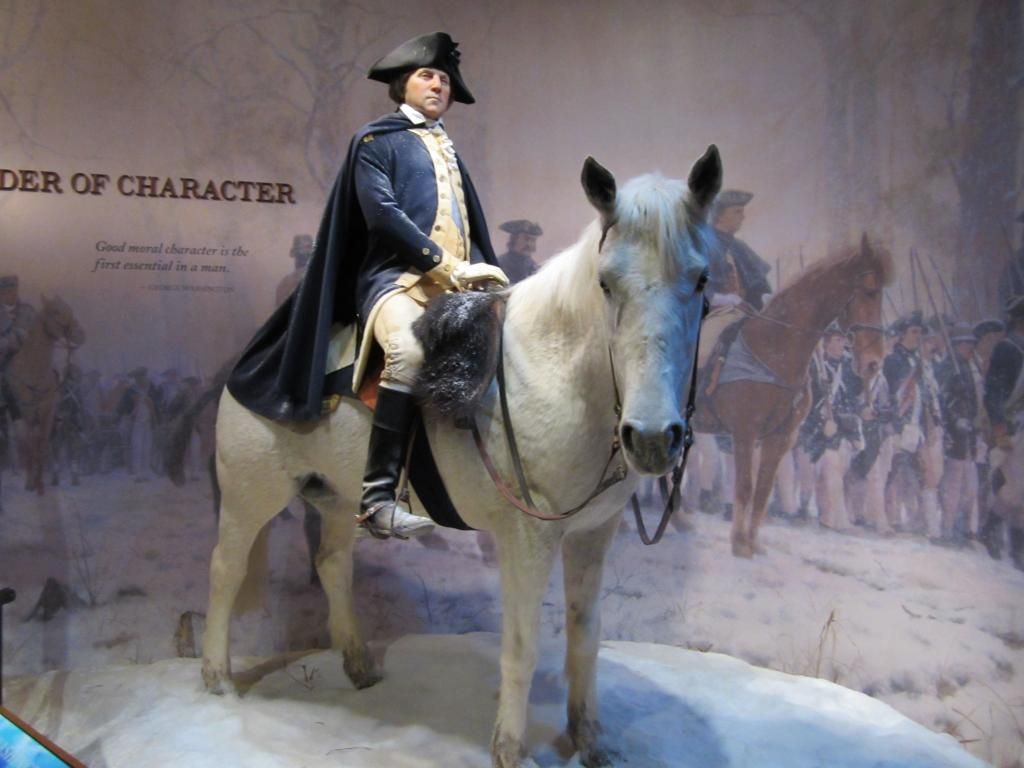
Continue through the Education Center and learn about Washington the man. When you get to the Revolutionary War years there is a must see - in fact, we often go into this more than once. But I will keep you guessing for a few moments to share with you Washington, the general.


Across from Washington is a theater with continuous showings. Go in for a very unusual experience. You will see three battles of the Revolution shown to you on two screens but with effects that will shake you in your seat when cannons roar and real snow that falls down on you as you are shown the soldier's winter at Valley Forge. This is terrific.

After the theater, see the exhibit about George Washington, Spy Master and also the artifacts from the Revolution.  As you move along now you will see Washington, the civilian and Washington, the farmer. You will also see Washington's false teeth - and no, they are not made out of wood. They are made from human teeth, rhinoceros teeth, and ivory all fit not very comfortably into a metal frame with springs to open and close them. You move from here to Washington, the President.


At the end of the exhibit area is Washington's death and you will see a replica of his coffin, some actual pieces of the casket, and learn about the funeral. With this you enter a hall out of the Education Center with another theater. This is a brief film in the round that shows Washington's legacy on America.

I should add that if you have children with you, there is a children's exploration room in the Education Center that will let the kids put on 18th Century clothing and experience the life of children in the 18th Century. It is located after the Revolutionary War section.

As you exit the Education Center you come to the Museum. Here you will see Houdon's bust and a cute film about the observations of his granddaughter when it was made. You will also see original Mount Vernon furnishings and furniture up close and items belonging to George and Martha. The Museum also has temporary exhibits that change.

When you have completed the Museum, walk along the long hallway that takes you to the Visitors Center that has two large gift shops and also a food court. If you recall, all the way back at the beginning of this article we arrived without having stopped for lunch. We wound up eating in the food court and paying over $7 each for a basic hamburger. The food court is not inexpensive. A soda was  $3.

Mount Vernon is open 365 days a year. Hours do change according to season and you can check out every detail about visiting Mount Vernon on their website. I highly recommend that you visit Mount Vernon if you are visiting Maryland, Virginia, or Washington, D.C. I have to say that since the Education Center opened it made the visit very much more than just touring a house.


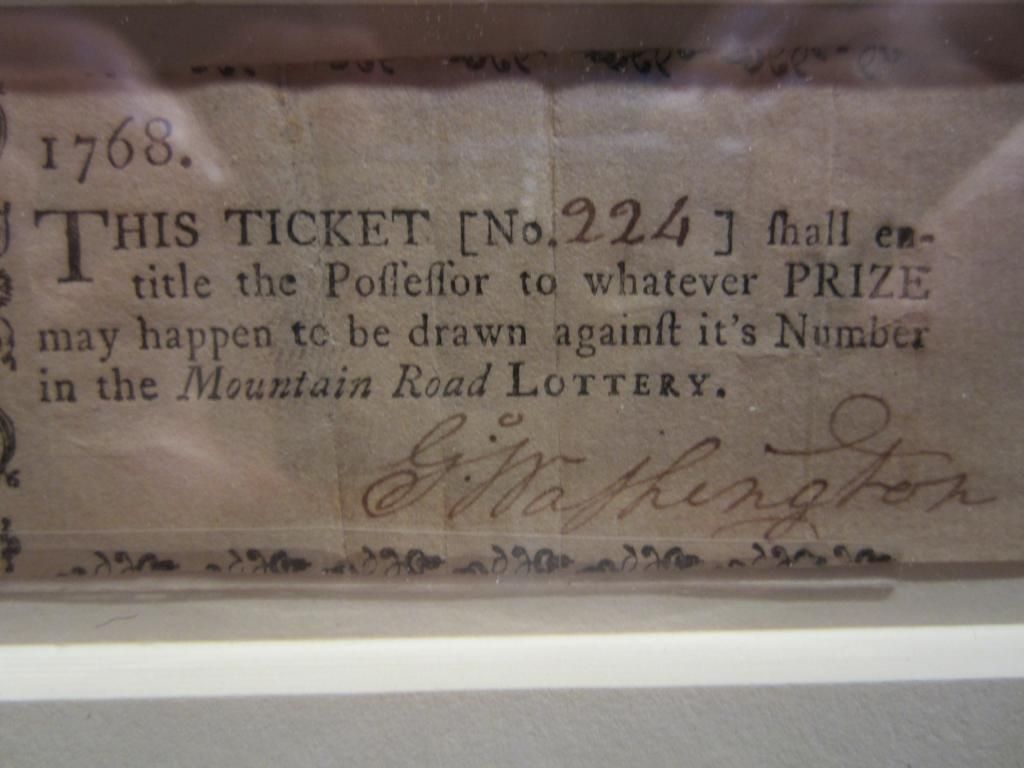
Washington played the Lottery